Fisheries
Program Overview
NSTC Fisheries Department
The role of the Northern Shuswap Tribal Council Fisheries Department is to manage the river fisheries for the communities of Stswecem'c Xget'tem and Xat'súll.
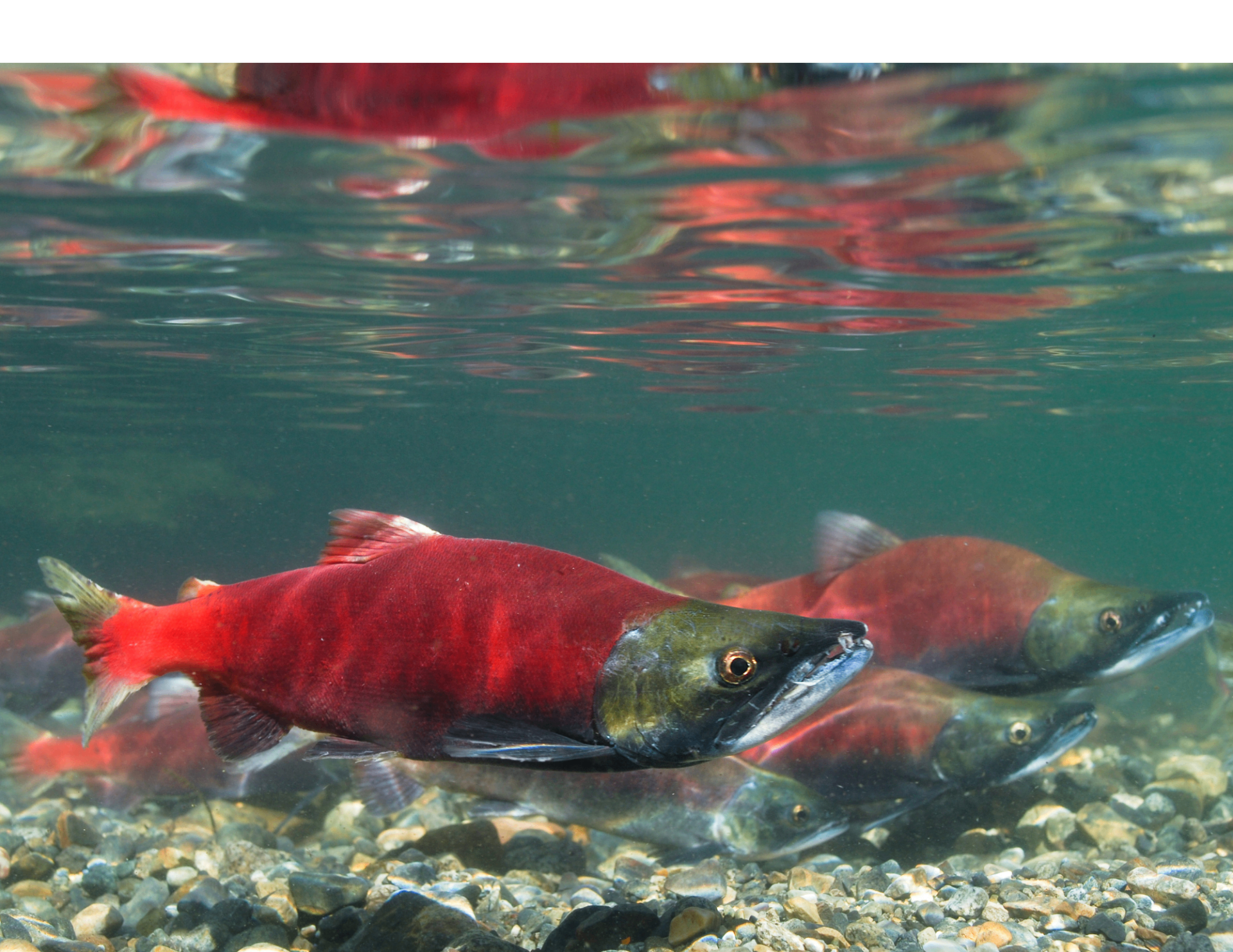
Fisheries has always been an important part of Secwepemc culture. We rely on fish for food, social, and ceremonial purposes. Fish hold significant cultural, trading, and economic value and at the same time, conservation and stewardship of this resource remains central to our practices, responsibilities, and beliefs. Today, our Secwepemc communities continue to harvest salmon from traditional areas throughout the Fraser River watershed using dip nets, a practice passed on from our ancestors.
Lakes and streams throughout the territory are also important, providing habitat for our salmon, freshwater fish and aquatic plants. These waters are essential year-round and hold the identity, sustenance, and spiritual connections to the people and lands that surround them.
All work undertaken by the NSTC Fisheries department has the ultimate goal of protecting fish in NSTC's title areas and increasing our involvement in the management of those fish.
Program Initiatives
Our Projects
Bass Eradication Project
Season: May to June
Each year, NSTC Fisheries Technicians assess the population size and distribution of small mouth bass in the Beaver Lake watershed. Smallmouth bass are an invasive species that have affected the territory for some time, with adult fish found in Beaver Lake and connected lakes, including Jones Lake.
Fraser River Catch Monitoring
Season: July to September
NSTC Fisheries employs seasonal catch monitors at three sites within the traditional fishing area. Catch monitors record the number of fish harvested, biological information, and fishing permit details.
Fraser River Salmon Sampling
Season: August
Each year, the NSTC Fisheries Department works with Gibraltar Mines and Xatśūll on a collaborative project to test Fraser River Sockeye salmon for heavy metal contaminants. Results are shared with community members, along with a consumption guide.
Chinook Float
Season: August to September
Fisheries Technicians survey Chinook salmon by rafting sections of the Quesnel, Cariboo, and Horsefly Rivers. The project includes five floats, completed once per week over five weeks.
The aluminum fence is built using rails, doweling, sandbags, and a live box to hold and count Coho salmon. Monitors record information such as fish length, markings, and sex.
NSTC Heli-Flights
Season: August to October
Each year, NSTC participates in between six and 14 helicopter enumeration flights to count Sockeye, Coho, and Chinook salmon.
McKinley Creek Coho Fence
Season: October to December
The McKinley Creek Coho Fence project has been operated by the Northern Shuswap Tribal Council Fisheries Department for more than 20 years. The project typically begins with fence construction on or before October 1 and continues until December 1 or freeze-up.
Quesnel River Coho Sonar
Season: October to December
The Quesnel River Coho Sonar project is a newer initiative for the NSTC Fisheries Department and has completed two successful seasons. The project typically begins with weir construction and sonar installation on each bank of the Quesnel River.
The aluminum weir helps guide fish past the sonar equipment so images can be recorded by computer. NSTC Fisheries Technicians review the sonar footage to count and measure migrating Coho salmon without needing to handle or see the fish in person.
Staff Contacts
For further information please contact:
Darcy William
Senior Fisheries Coordinator
srfishcoord@nstq.org
250-392-7361 ext. 228
Darren Tenale
Fisheries Coordinator
fishcoord@nstq.org
250-392-7361